The product
The headset is the controller
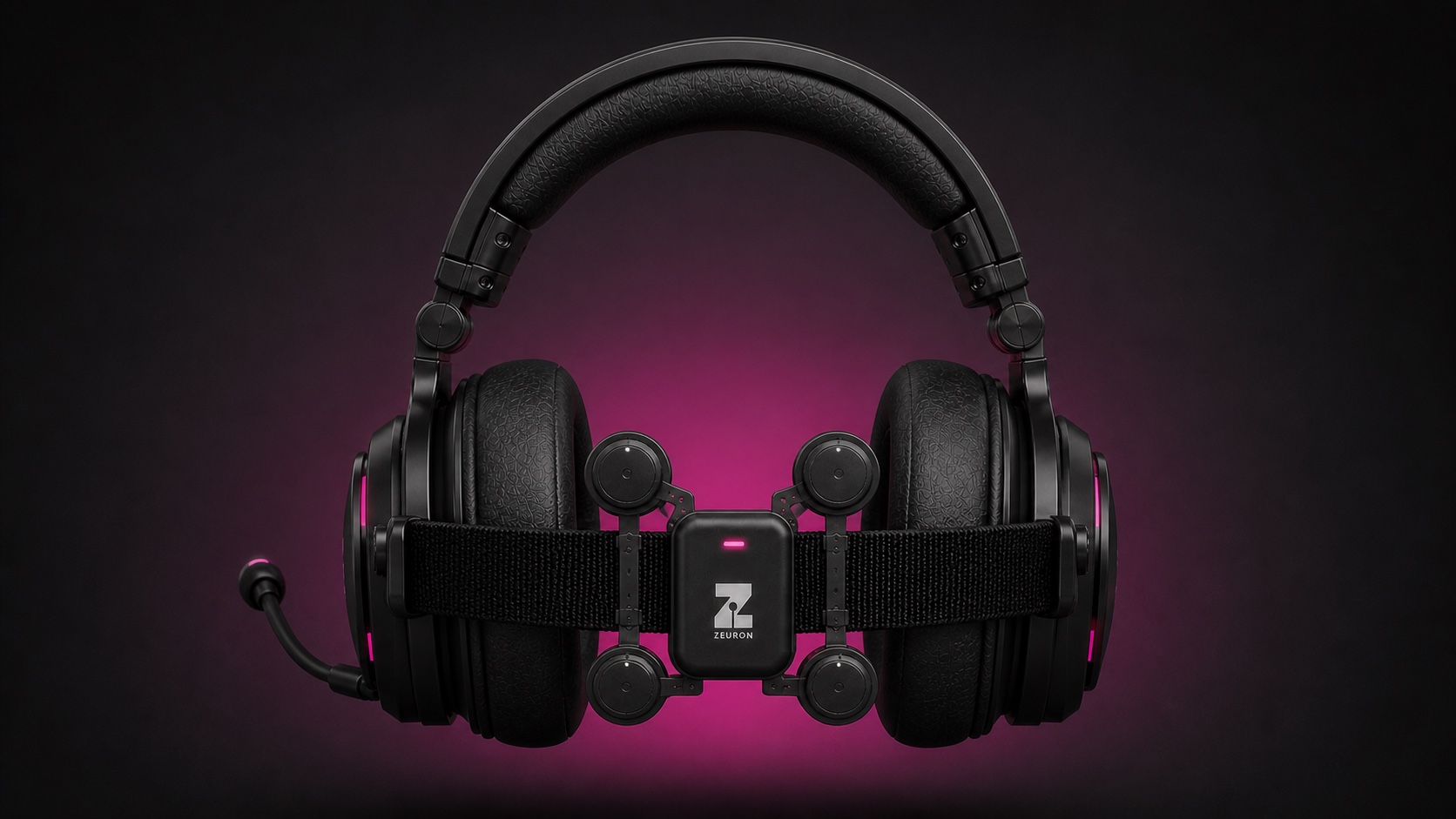
Gambit is two things: a headset that reads your brain’s electrical signals, and an app that turns them into input your games already understand. That’s the whole setup.
Device imagery is concept art.
The lineup
Two tiers, one signal
The essentials
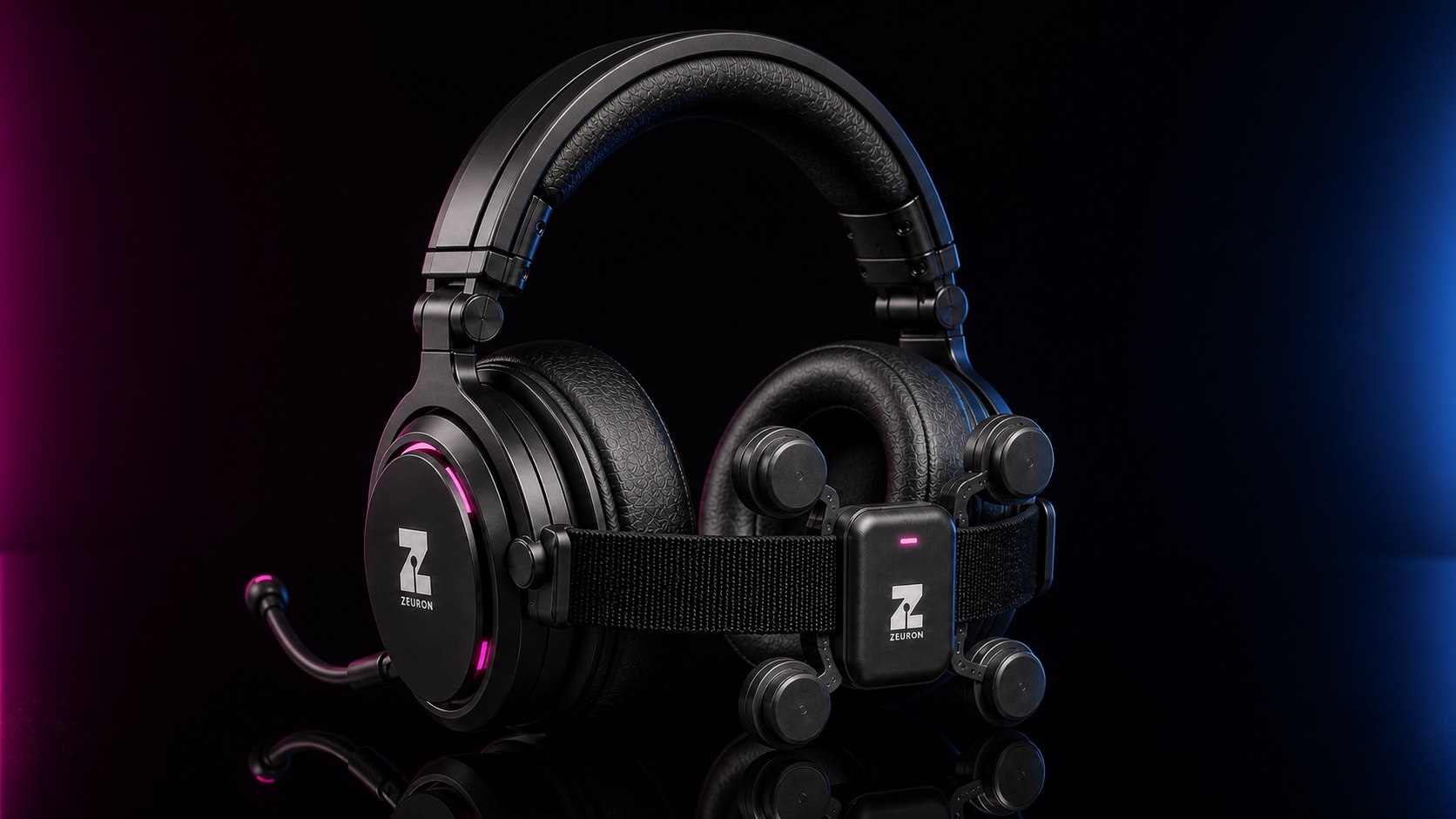
Gambit
The headset and the Gambit app — everything you need to turn brain signals into game input. No subscription required.
- Non-invasive headset with ziest dry sensors
- The Gambit companion app
- Works with games out of the box
Pricing to be announced
More neurotech
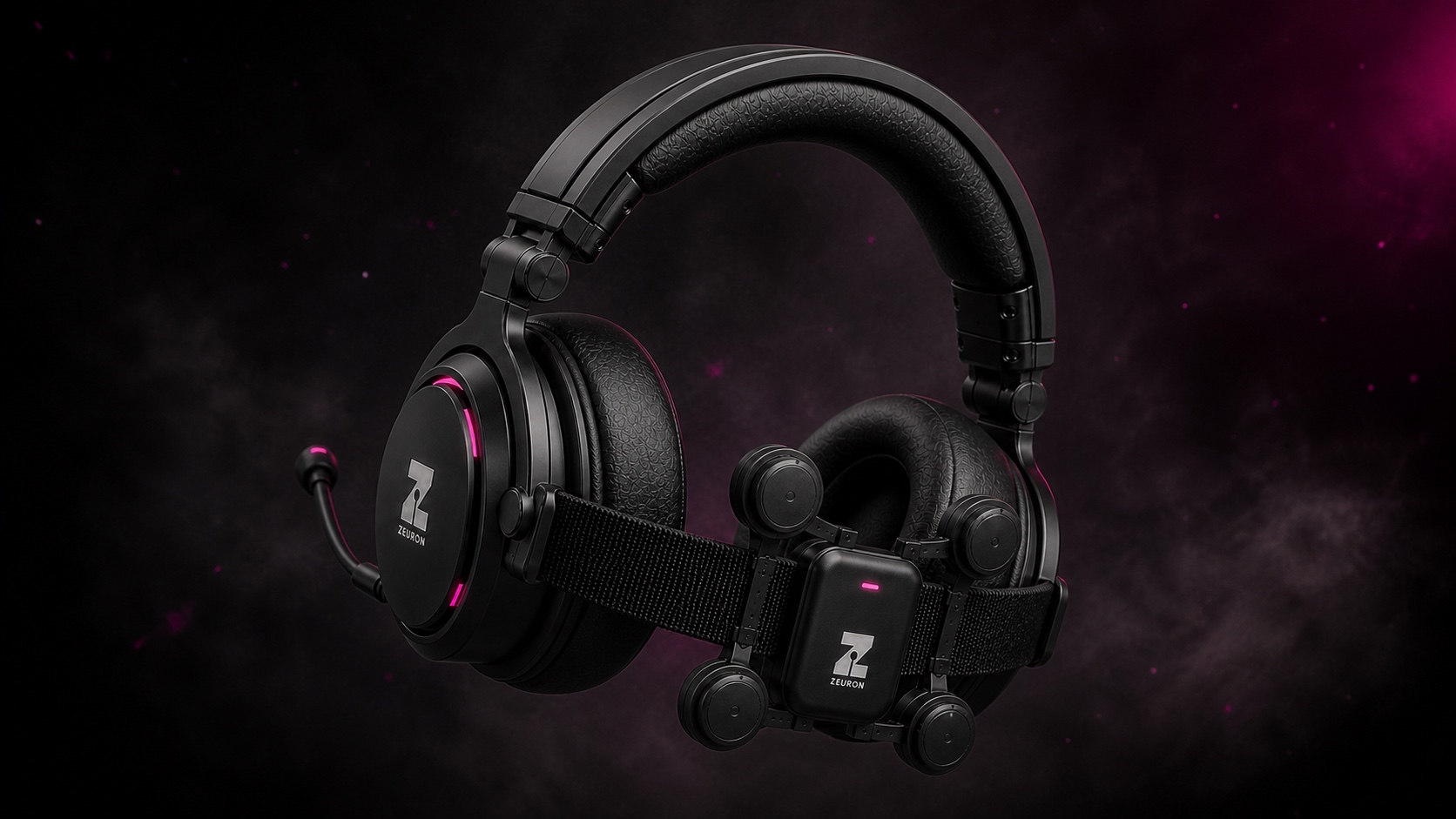
Gambit Pro
More neurotech behind the controller: an expanded sensor suite and a subscription app that keeps growing — unlocking features beyond play, like meditation and sleep tracking, over time.
- Expanded on-board sensor suite
- Subscription app with expanding neuro features
- Performance and personalization tools
Pricing to be announced
Gambit is in development — the lineup above is the plan, and the details will firm up as the prototype matures. The newsletter below is where launch news lands first.
The device, up close
On the head, not in it
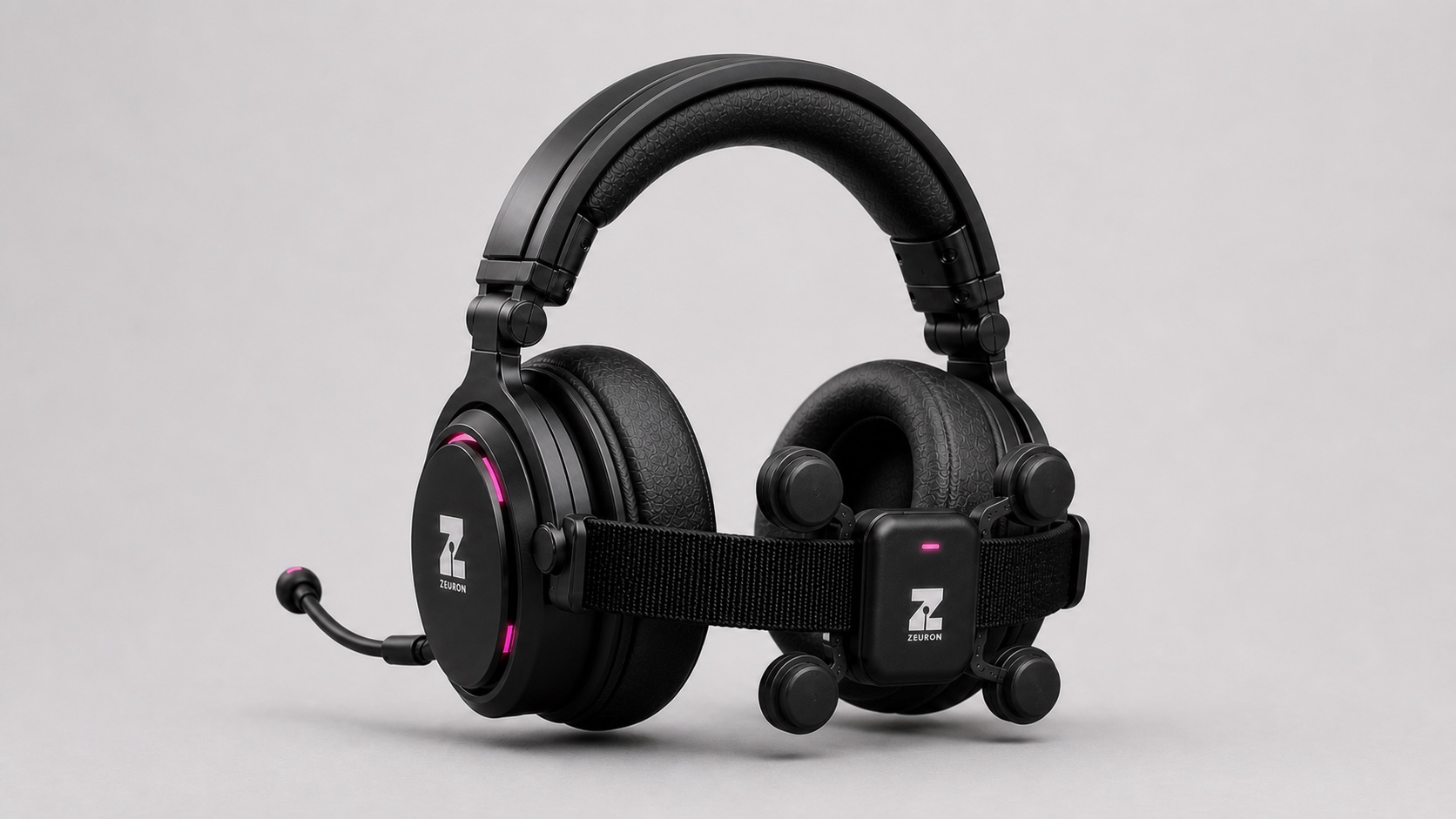
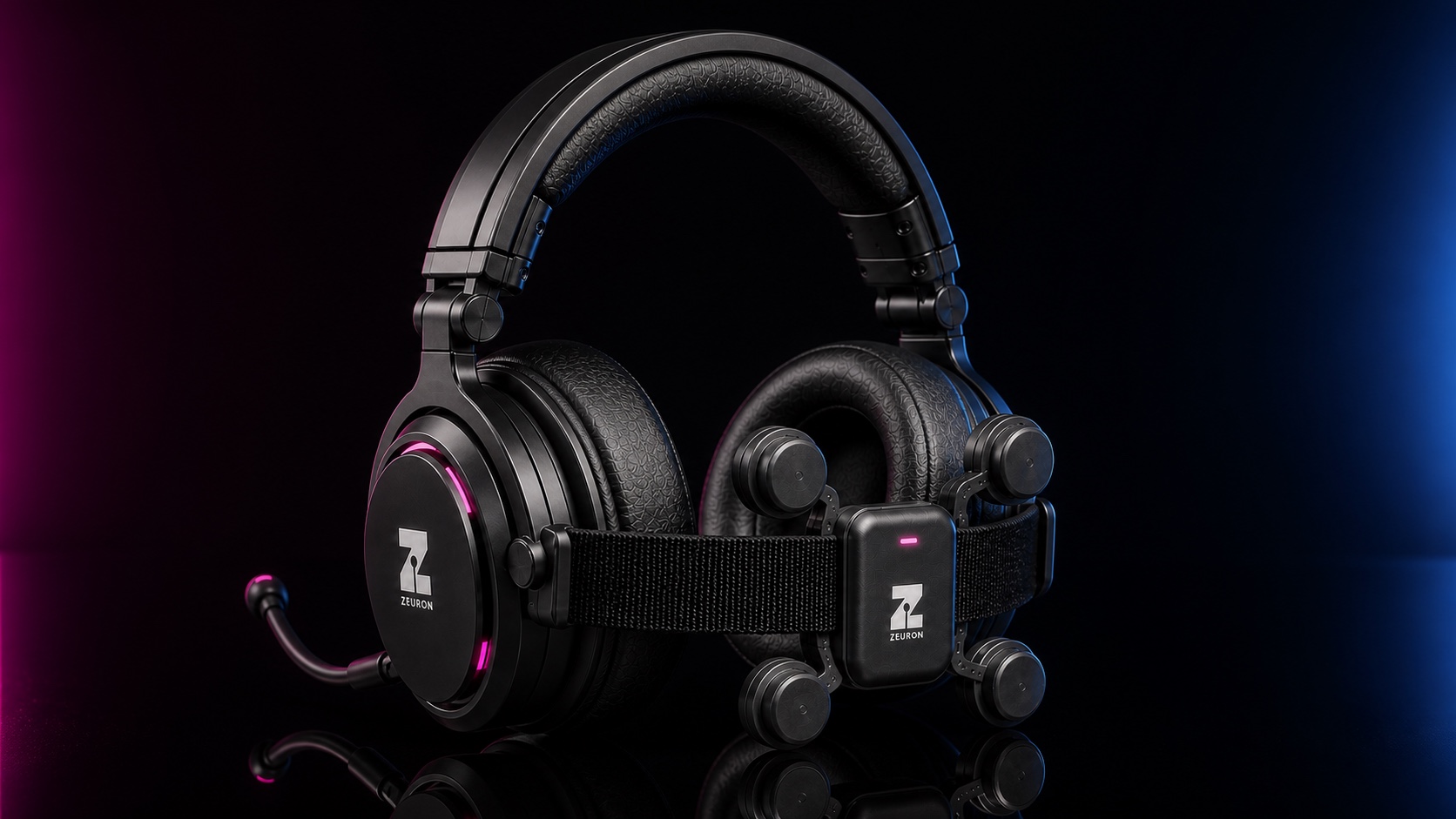
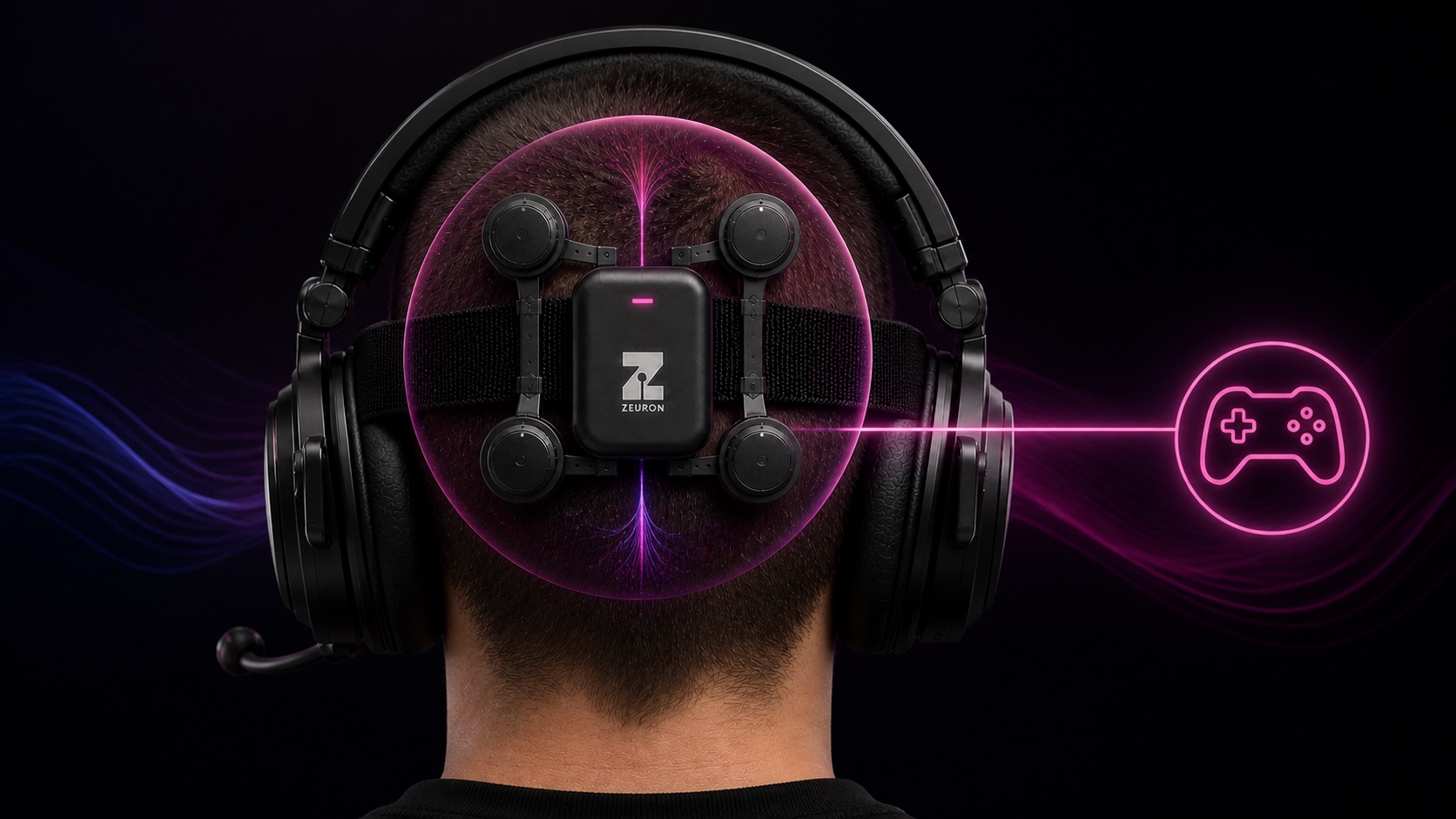
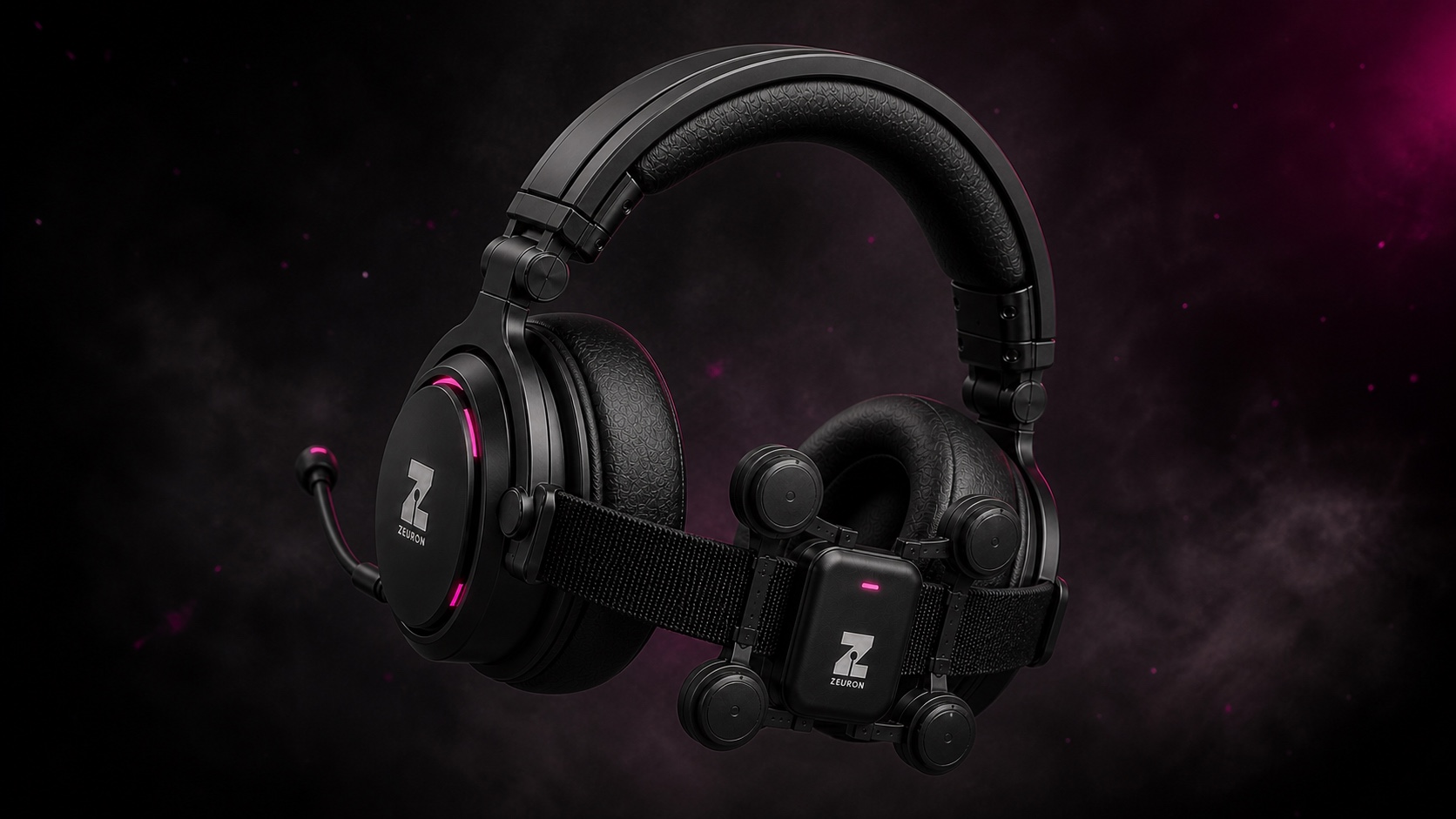
Non-invasive hardware worn on the head: ziest dry sensors read the brain’s electrical signals, and the on-board processing unit interprets them with AI — on the device itself, so your data stays with you.
- No gel
- No implants
- No surgery
- Wears like a gaming headset
Loading 3-D model…
Concept visualization — an illustrative 3-D model, not the final Gambit hardware. All product imagery is concept art.
01
ziest dry sensors
ziest — Zeuron's in-house Electrode and Sensor Technology. Dry, customizable, non-invasive sensors line the headband and rest against the head: no gel, no implants, no surgery. Beyond EEG, the suite adds PPG, IMU, SpO2, temperature, and ambient light — the hardware behind features like meditation and sleep tracking.
02
Processing unit
The pod at the back is the core of the innovation: it receives the sensors' signals and interprets them with AI-based algorithms, then hands your game its input. As much processing as possible happens on the device — minimal data transfer, privacy by design.
03
Fit adjustment
A sliding yoke adjusts the fit — the whole device wears like the gaming headset it is.
04
Boom microphone
Voice for your team — and one more input in the sensor suite. Like everything Gambit hears, it's processed on the device.
The mechanics
What a thought does in game
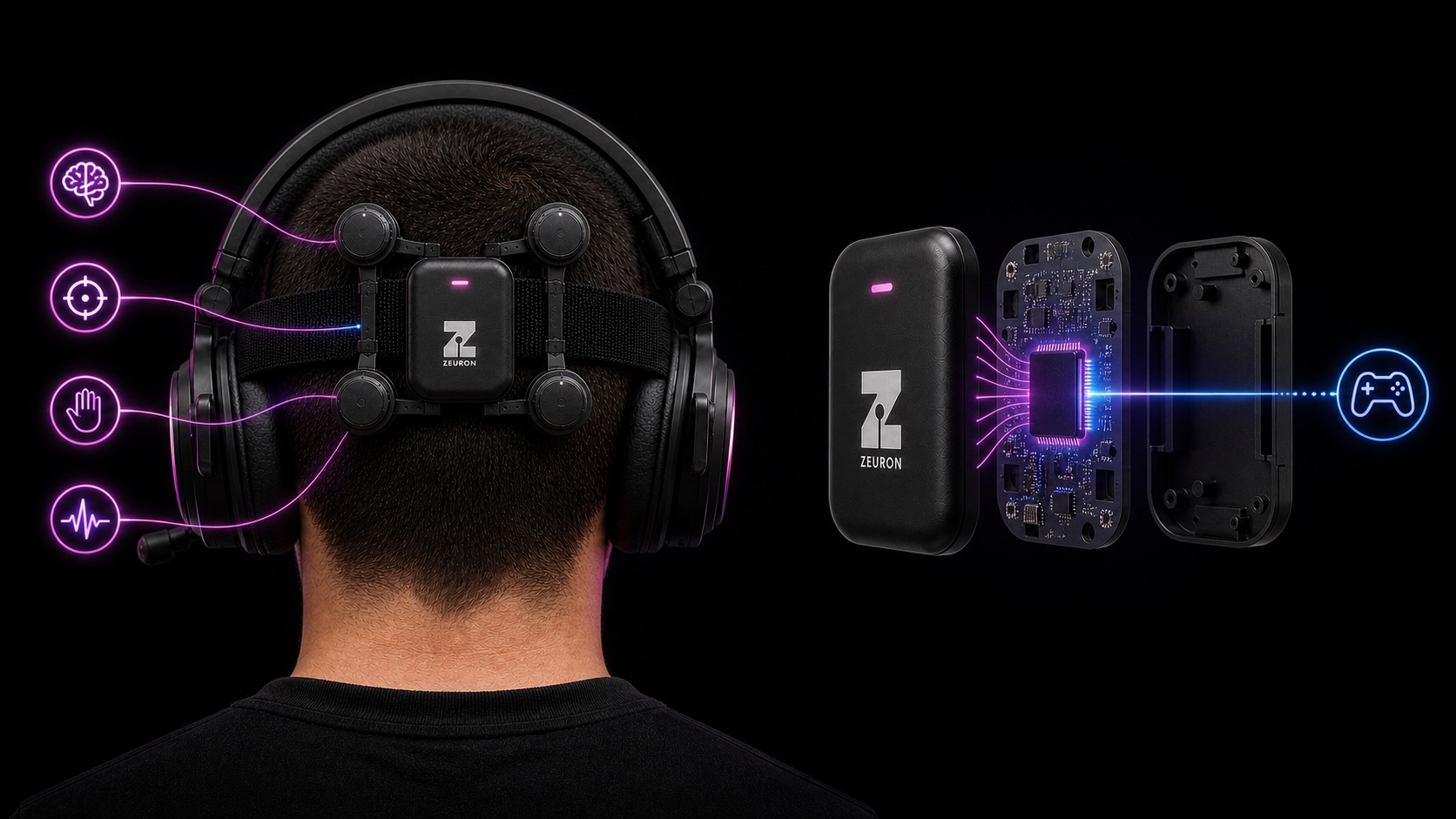
Four chains cover most of play. Each one starts in the sensor band and ends as input your game already understands.
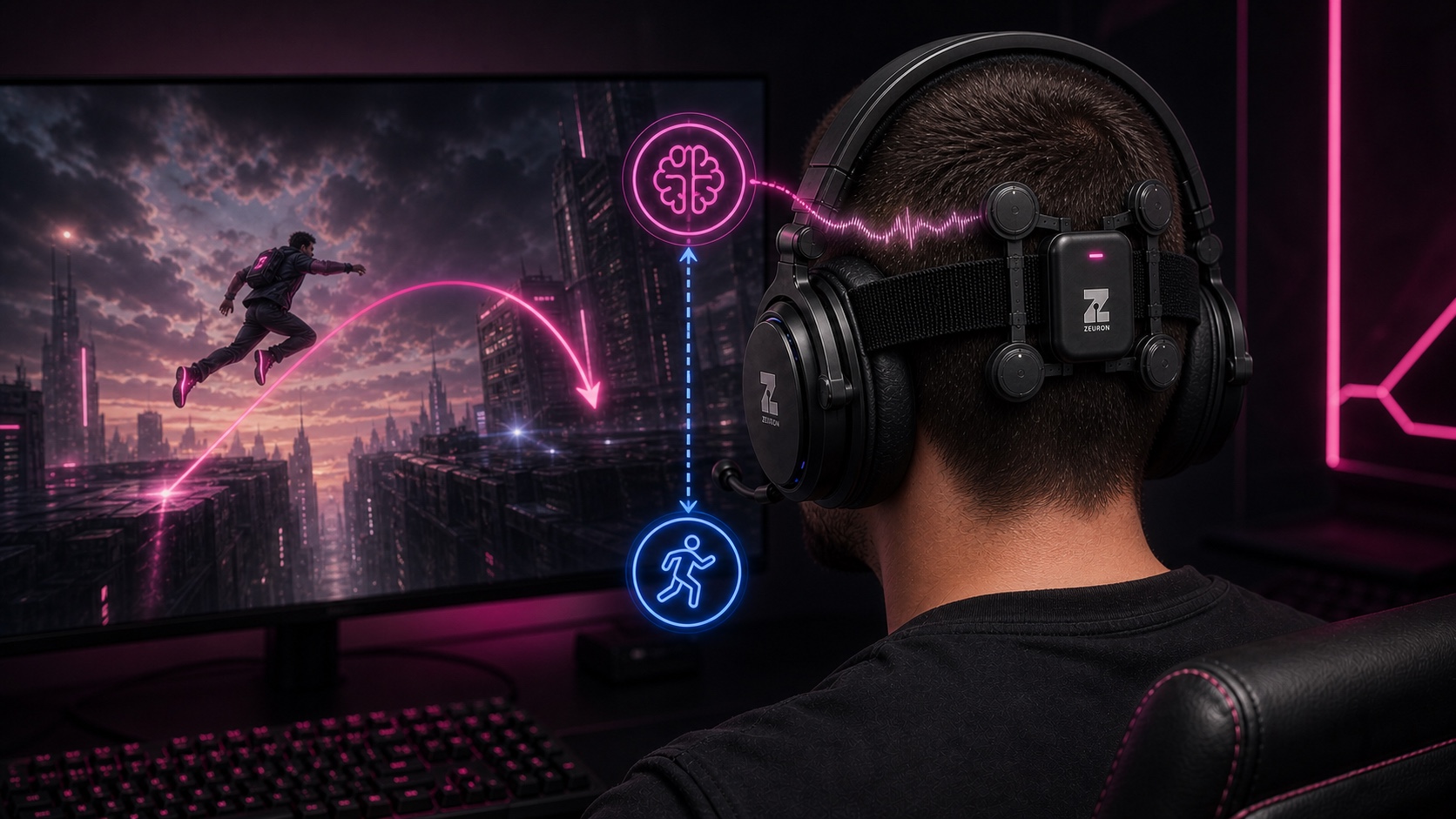
Intent / Jump
The simplest chain in the library: decoded intent becomes the jump on screen. One thought, one input — the grammar every mechanic below builds on.
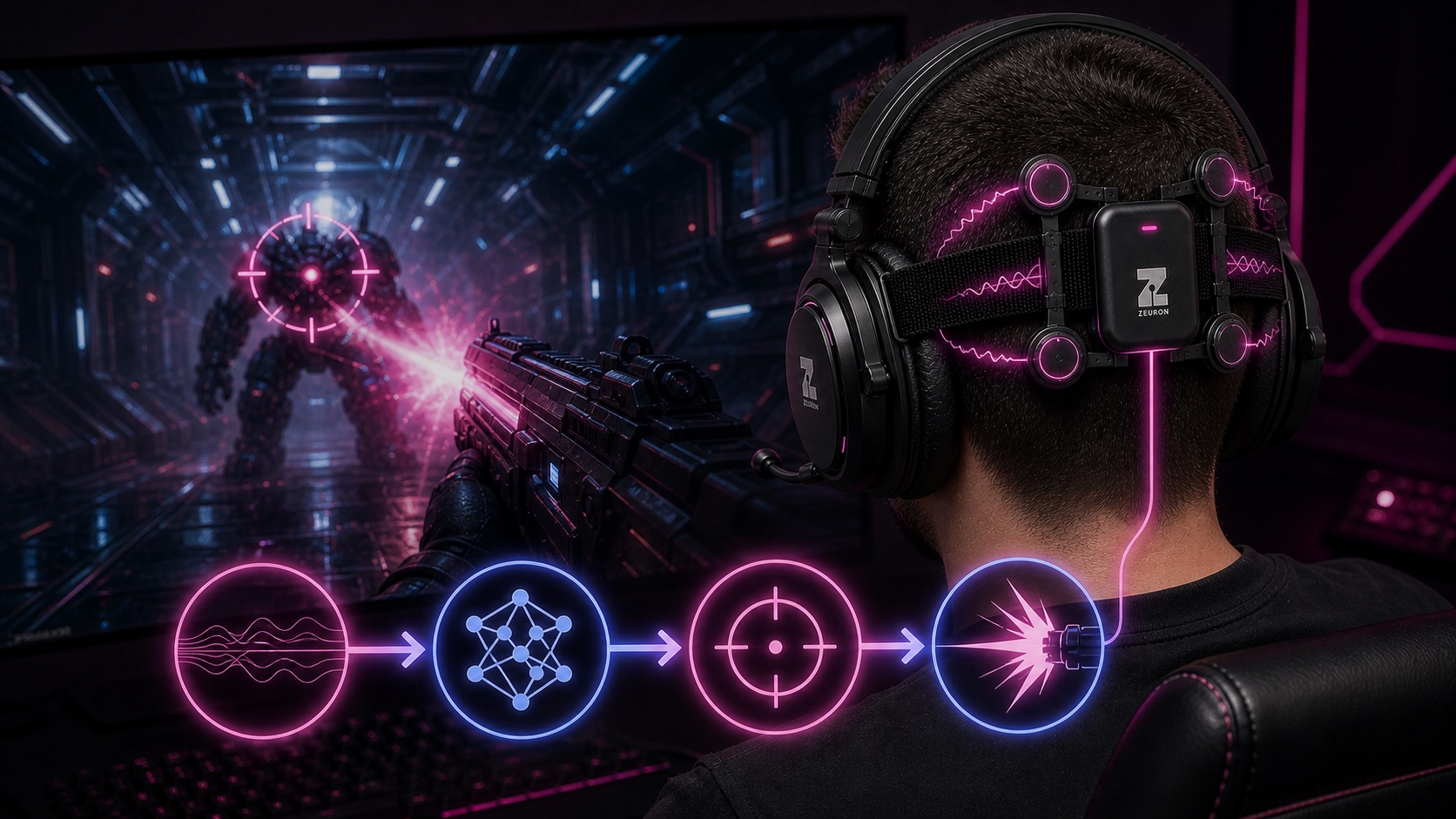
Sense / Decode / Aim / Fire
A full combat loop: the sensor band reads the signal, the on-device AI decodes it, and aim and fire land as ordinary controller input — inside the reaction window.
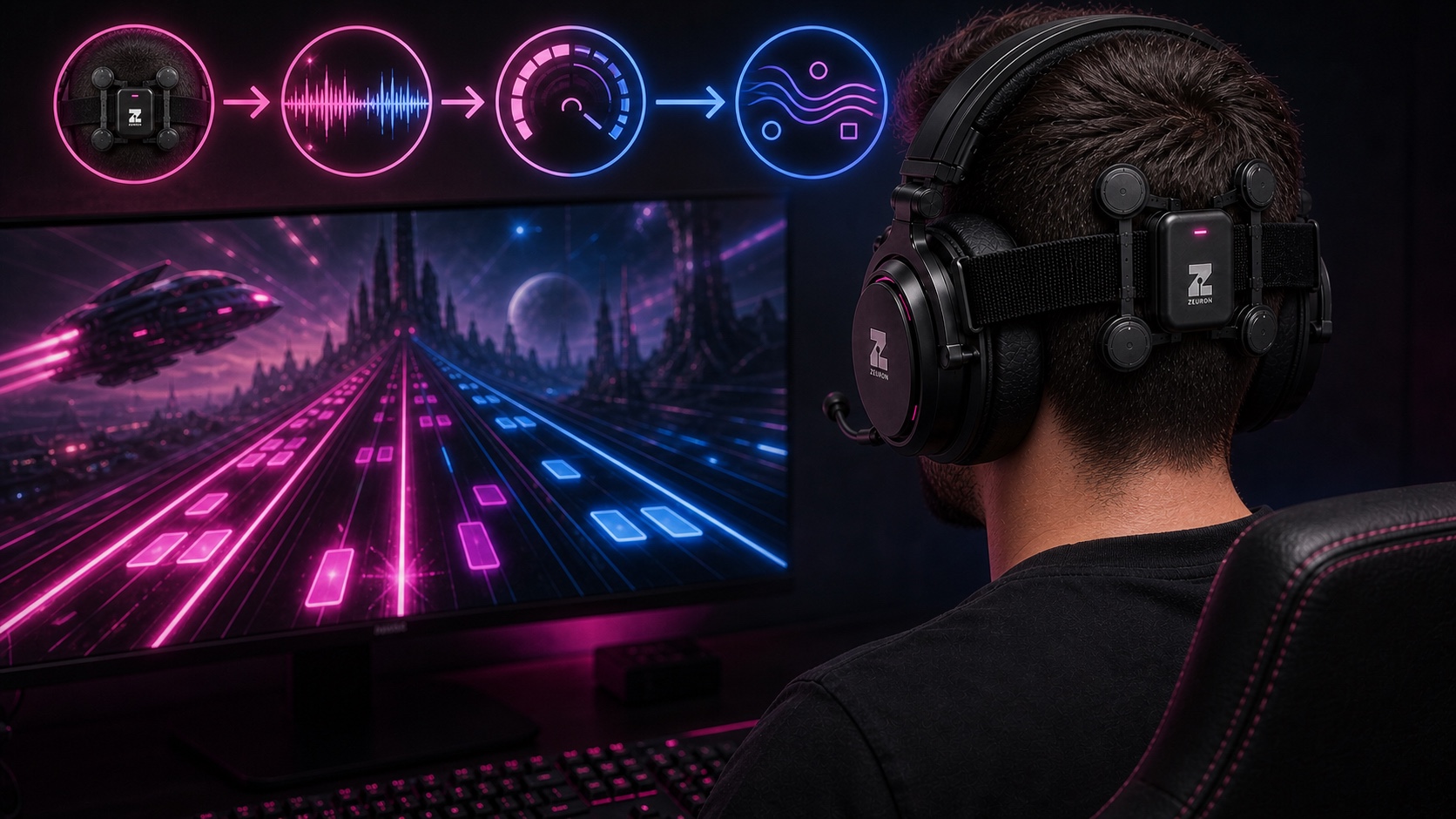
Engagement / Pace / Flow
The signal runs both ways. Reading engagement, the game paces itself to hold you in flow — pushing harder when you're sharp, easing off when you're not.
BCI / Gamepad / Co-op
Mixed lobbies are the point. One player on Gambit, one on a gamepad, same match, same rules — the BCI option adds players without splitting them.
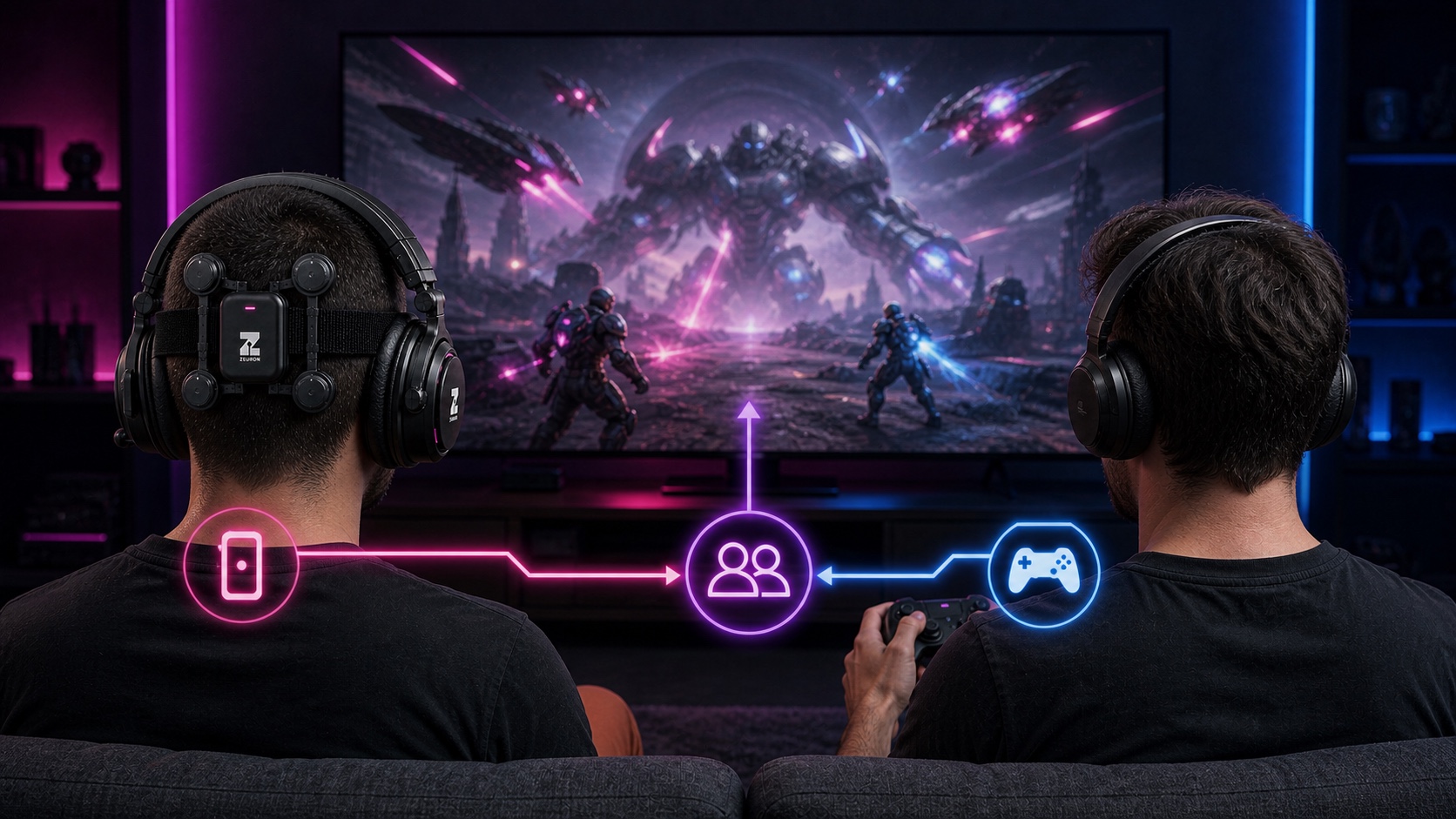
Imagery is concept visualization — the product is in development.
What it does
Four promises, kept by design
Plug & play
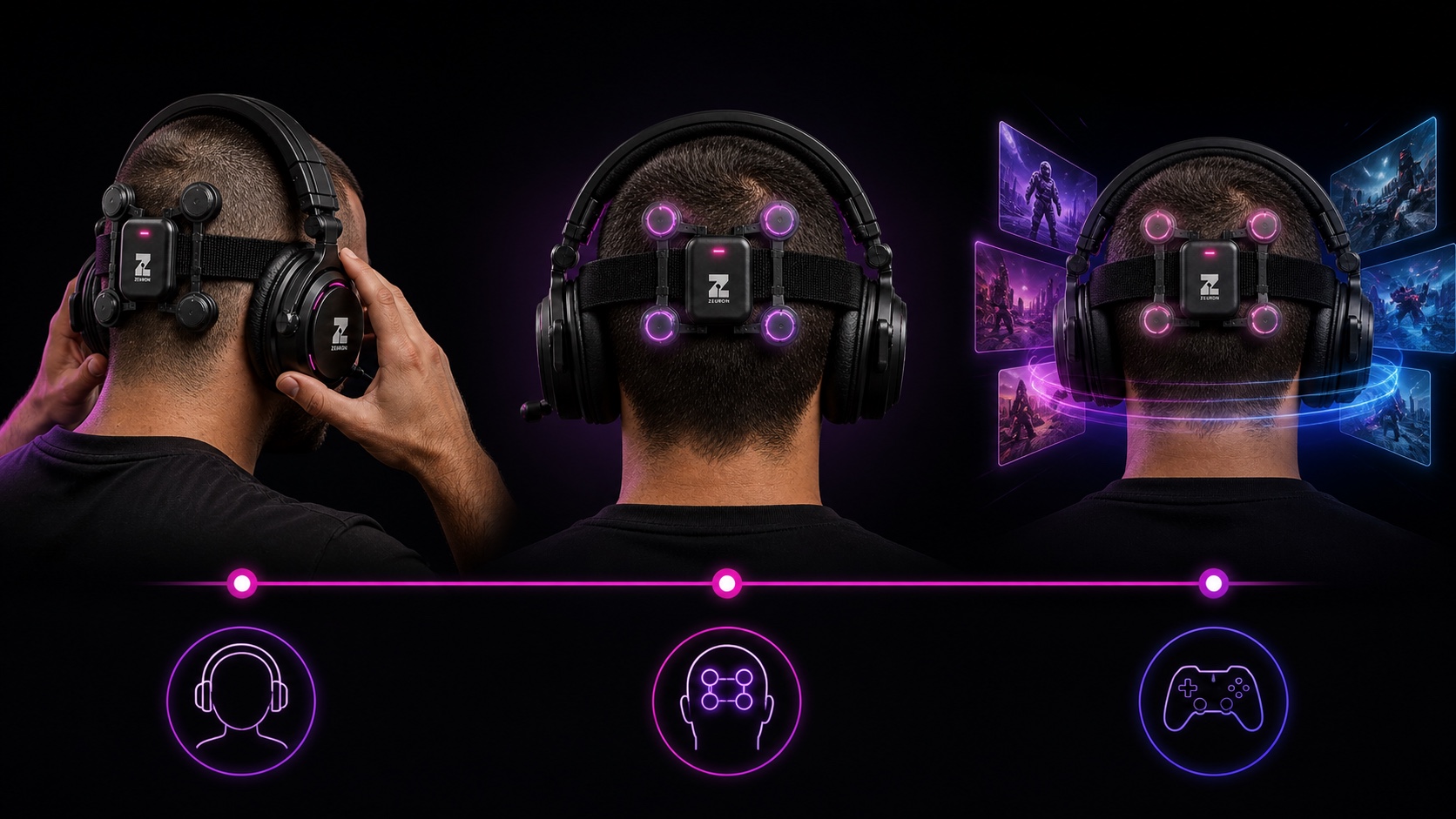
Put it on, select the BCI option, and play. Setup is a calibration, not an installation — no gel, no implants, no surgery.
Works with your setup
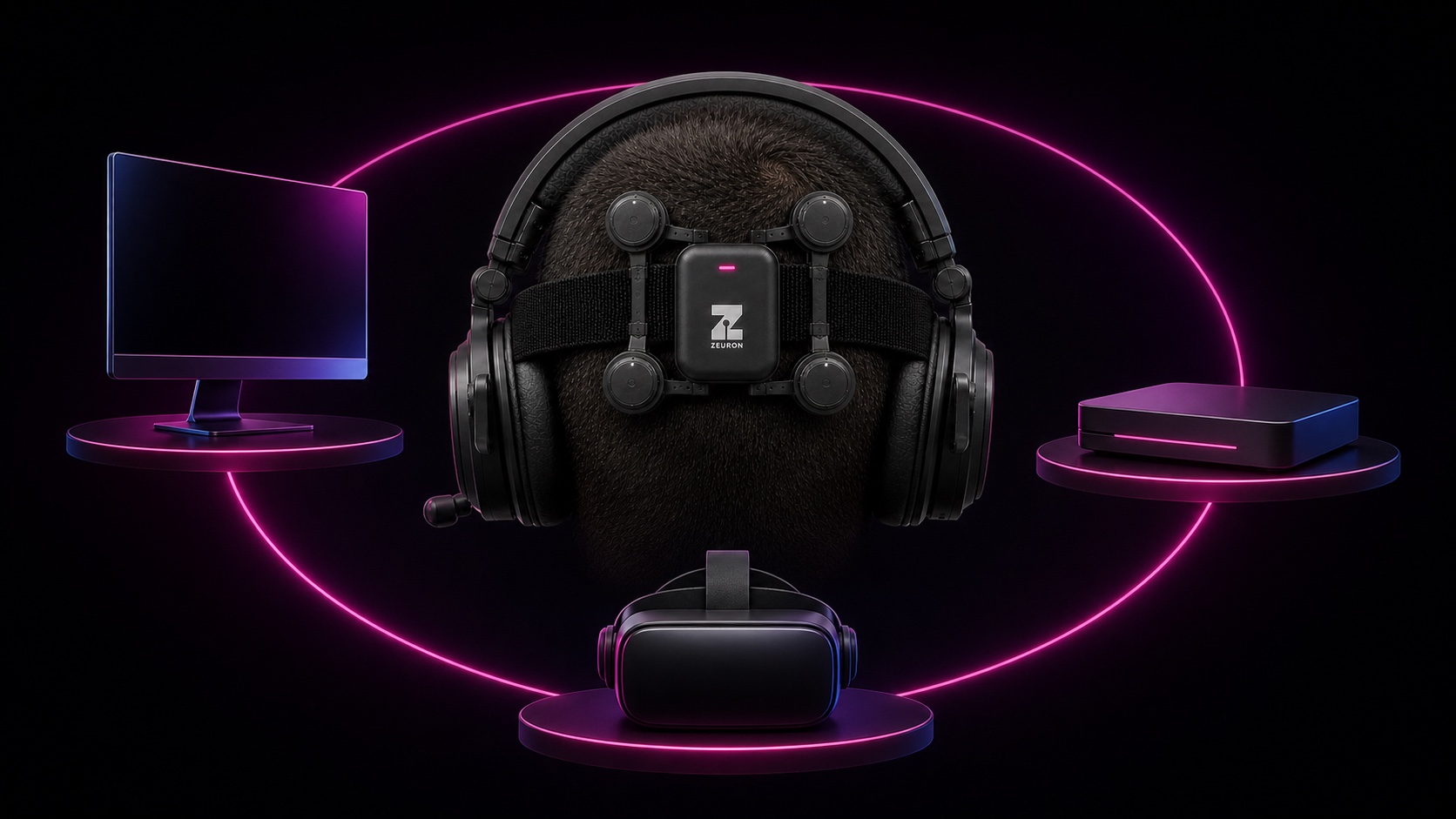
Built for the hardware you already own — PC, console, and VR — and to play alongside the controllers and accessories already on your desk.
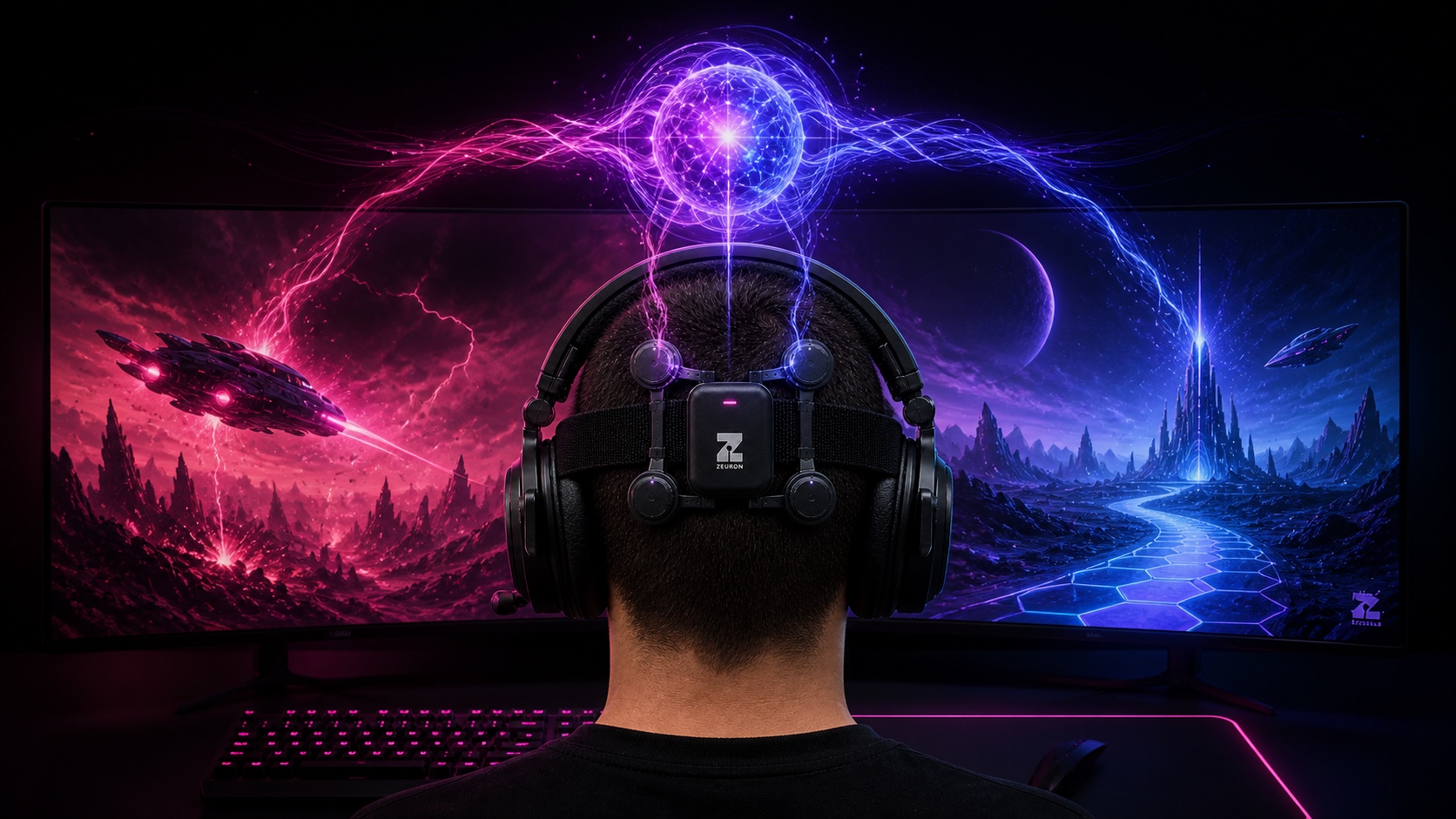
Adapts to you
The signal runs both ways: you steer the game, and the game reads how you're doing — adapting the experience and growing with your skills over time.
Private by design
Your brain signals are processed on the device, and privacy is a design constraint from the first prototype — not a settings page added later.
Be first in line
The newsletter hears it before anyone
Milestones, beta invitations, and launch news — in the order people signed up.
An investor, a developer, or looking to join the team? Contact us directly — questions, a message, and document upload all live there.